-
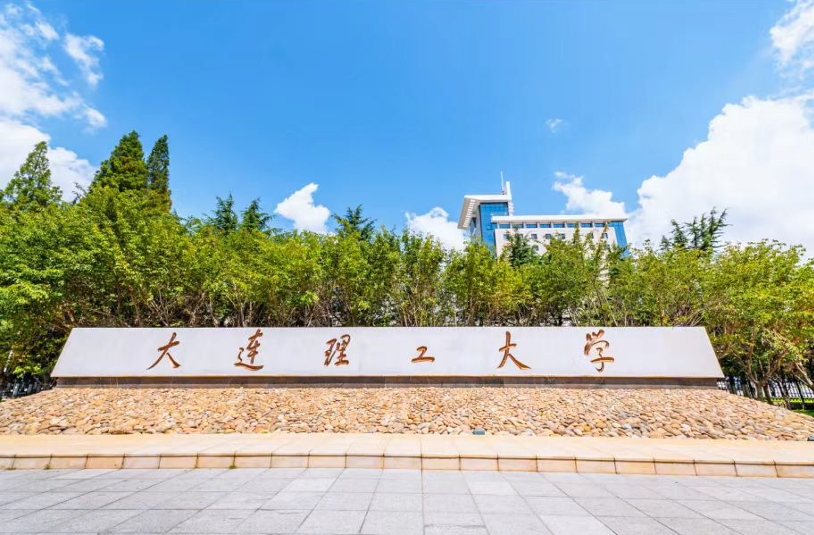 Theoretic Physics and Plasma PhysicsDALIAN, CHINA JUNE 26, 2026
Title:
Theoretic Physics and Plasma Physics:
Interactive Convergence of Cold Plasma, Thermal Plasma and Fusion Plasma.
Date:
June 26th, 2026 (UTC+8)
Organizer:
The School of Physics, Dalian University of Technology
Symposium Chair:
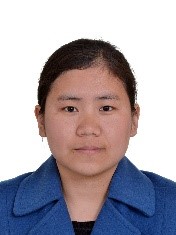
Dr. Shuxia Zhao
Personal Bio:
Dr. Shuxia Zhao obtained her Bachelor and Master degrees from the Hebei Normal University within the years of 2000-2007, and her PhD from the Dalian University of Technology within the years of 2007-2010. Then, she went to the University of Antwerp, Belgium for the Post-doc working experience within the years of 2010-2012, and later on she returned to the Dalian University of Technology, working formally as a teacher and meanwhile a scientific researcher. Before the formal employment, she sequentially investigated the nitrogen parallel plate and hollow cathode discharges with the particle-in-cell and Monte Carlo simulation, the E-to-H mode transition and hysteresis of argon inductively coupled plasma with both the fluid and hybrid models, and the fluorocarbon plasma and its etching mechanisms based on silicon material wafer. She is now engaged in the numerical simulation and theoretical analysis of discharge structure hierarchy of electronegative and radio frequency inductively coupled plasma. The hierarchy presently discovered includes the stratification, parabola and ellipse profiles of ion density, double layer, acoustic ionic vibration, blue sheath, ionization instability, and different types of mass and energy self-coagulations, e.g., ambi-polar type, chemical type, and thermal conductive type. This detailed discharge hierarchy helps people deep recognize the plasma source and possibly open new fields for its applications, such as free nuclear fusion based on the self-coagulation and compressible heating mechanisms.
Call for Papers
Background:
Since the gaseous discharging plasma is complex, it is systematically studied by means of the methods of numerical simulation, experimental diagnostic, and analytical theory. With respect to the numerical calculation, we can develop the simulation code, such as fluid model and particle model by ourselves, through the fortran or C++ computer language, or rely directly on the commercial softwares, such as Analysis, Comsol, Pegsus, or Quantemol, etc. Whether using the self-written code or the commercial software, the discharge profiles are always the preliminary data that people are confronted with. At interpreting these profiles of different parameters of plasma, such as density, temperature, charge density, potential, electromagnetic field, flux of mass and energy, and velocity of species etc., the concept of discharge structure is constructed. Usually, the discharge structure of electropositive discharging plasma such as the argon inductively coupled plasma (ICP) is characterized by the parabola and Bessel functions, respectively in axial and radial directions, at the assumption of azimuthal symmetry. While the discharge structure of electropositive plasma is understandable and moreover it is validated by means of simulation, theory and experiment, the discharge structure of electronegative plasma is quite unknown and less cared about yet. Regarding the fact that the industrial plasmas are almost the electronegative plasma type, a systematic study of discharge structure of such plasmas is important since it helps people better recognize the plasma source and hence optimize present plasma techniques and excite new frontier of application in future, probably.
Goal/Rationale:
Actually, the structure of electronegative plasma has been investigated since the 80s of last century, but most of the studies are focused on the analytical theory of fluid model at that time. The theory utilized many assumptions, such as the constant temperature profile, collisionless, cold ions, and net positive chemical source for species, etc. At these approximations, the ambi-polar diffusion of electronegative plasma, the stratification of discharge, the double layer dynamics, and the parabola, ellipse, and flat-top ionic density profiles were given. Presently, the self-consistent fluid simulation technique with less approximations is fully developed, and the plasma model of fluid simulation of Comsol related to the Ar/SF6 ICP generates perfectly the above discharge structure. Moreover, since it is a self-consistent simulation, it is found that the self-coagulation dynamics that consists of free diffusion and net negative chemical source and is centered in the structure prevails, and together with the above other structures, the discharge of electronegative plasma is hierarchical. Furthermore, the correlations of the self-coagulation with the assistance of compressible heating and the discharge hierarchy, to the wave-particle duality of quantum, the nuclear fusion of astrophysical plasma, the particle physics with respect to the Yukawa’s potential, and the geophysical structure morphology are displayed. It is believed that the plasma state experiences the cold plasma (i.e., glow discharge), the thermal plasma (i.e., arc discharge), and the fusion plasma (i.e., nuclear reaction), by means of the self-coagulation and compressible heating. Besides, the self-coagulation is found universal, existing in the chemical dynamics of ions, electrons, and neutrals, and even in the thermal energy dynamics, i.e., not mass transport, but energy transport.
Scope and Information for Participants:
The last conference of this topic preliminarily built the connection between the different branches of plasma physics, since we already included presentations given in the fields of low and high temperature plasmas. As we know, it is the first time for the two plasma sources formally interacting in an academic conference, since they are usually separately reported before. In this new workshop, we address the physical reason why the two types of plasma sources are connected, and moreover the workshop is aimed at widening the inter-disciplinary works from the plasma field itself to the connection of plasma to other fields, such as quantum, particle, nucleus, astrophysics and geophysics.Topics:
The main topics of this symposium are listed below.
Mathematical Physics
- Dynamical Systems
- Equilibrium Statistical Mechanics
- General Relativity
- Integrable Systems
- Many-body Quantum Systems and Condensed Matter Physics
- Nonequilibrium Statistical Mechanics
- Partial Differential Equations
- Probability and Random Structures
- Quantum Field Theory
- Quantum Information
- Quantum Mechanics and Spectral Theory
- String Theory and Quantum Gravity
Meanwhile, submissions aligned with the overall conference theme are also welcome.
Applied Physics
- Accelerator Physics
- Accelerator Research and Development
- Acoustics, Noise and Vibration
- Applications of Particle Trapping
- Biophysics, Medical Physics
- Detectors and Data Handling
- Engineering Physics
- Instrumentation and Control Components
- Magnetic Devices and Materials
- Materials Physics
- Mechanics, Rheology and Tribology
- Nano and Metamaterials
- Neuromorphic Computing
- Nuclear Physics
- Quantum Chromodynamics and Quantum Computers
- Spin Dynamics
- Statistical Mechanics
- Stealth Technology
- Storage Ring Physics
- Systems and Automation Thermodynamics
Computational Simulation
- Adaptive Control and Non-Linear Control
- Artificial Intelligence
- Computational Intelligence
- Design, Analysis and Applications of Optimisation Algorithms
- Deterministic, Dynamic, Stochastic, Robust and Combinatorial Optimisation Models
- High Performance Computing
- Information Science
- Intelligent Control, Neuro-control, Fuzzy Control
- Machine Learning
- Mathematical Modeling and Simulation
- Nano- and Bio- Mechanics
- Optimization Techniques
- Robotics and Automation
- Smart Structures and Health Monitoring
- Soft Computing
- Structural Optimization
- Theoretical and Empirical Studies of Computational Methods, Models and Empirical Analysis
Mathematics and Applied Mathematics
- Algebra and Its Application
- Applied Partial Differential Equations
- Bayesian Inference
- Control Theory
- Discrete Applied Mathematics
- Fluid Dynamics
- Fuzzy Mathematics and Its Applications
- Geometry
- Image Processing
- Integral Equations
- Nonlinear Problems in Mechanics
- Numerical Analysis
- Optimization and Operational Research
- Planning and Scheduling
- Probability Theory
- Regression Analysis Estimation Theory
- Sampling Theory
- Statistics
- Stochastic Processes
Submission:
Prospective authors are kindly invited to submit full papers that include title, abstract, introduction, tables, figures, conclusion and references. It is unnecessary to submit an abstract in advance. Please submit your papers in English.
Each paper should be no less than 4 pages. One regular registration can cover a paper of 6 pages, and additional pages will be charged. Please format your paper well according to the conference template before submission. Paper Template Download
Please prepare your paper in both .doc/.docx and .pdf format and submit your full paper by email with both formats attached directly to [email protected]
Important Dates:
| Process | Date & Time |
|---|---|
| Submission Deadline | June 19, 2026 |
| Symposium Date | June 26, 2026 |
| Notification of Acceptance | 7-20 workdays |
Publication:
Accepted papers of the symposium will be published in Theoretical and Natural Science (TNS) (Print ISSN 2753-8818), and will be submitted to Conference Proceedings Citation Index (CPCI), Crossref, CNKI, Portico, Engineering Village (Inspec), Google Scholar, and other databases for indexing. The situation may be affected by factors among databases like processing time, workflow, policy, etc.
Publication info
Title: Theoretical and Natural Science (TNS)
Press: EWA Publishing, United Kingdom
ISSN: 2753-8818, 2753-8826 (electronic)
This symposium is organized by CONF-MPCS 2026 and it will independently proceed the submission and publication process.
* The papers will be exported to production and publication on a regular basis. Early-registered papers are expected to be published online earlier.