-
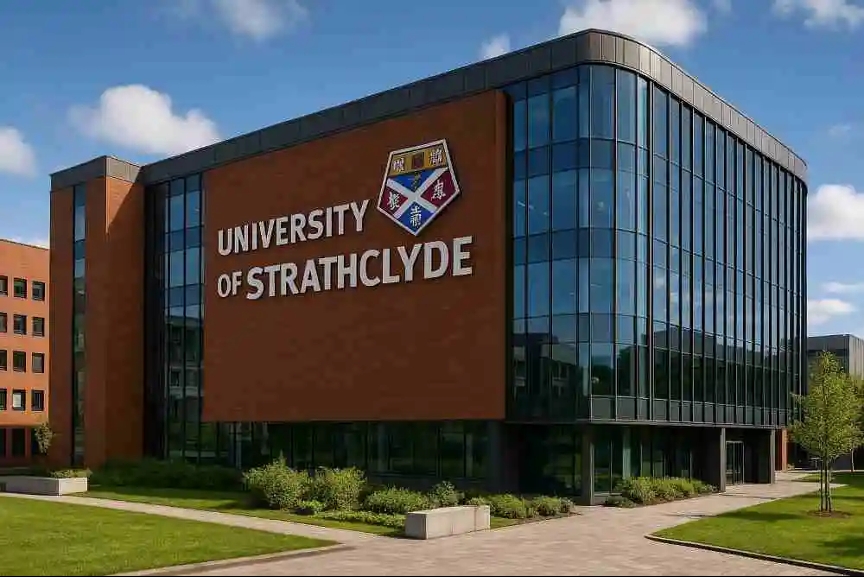 Computational Simulation and Applied MathematicsGLASGOW, UK
JUNE 24, 2026
Title:
Computational Simulation and Applied Mathematics
Date:
June 24th, 2026 (UTC+1)
Organizer:
Department of Computer and Information Sciences, University of Strathclyde
Symposium Chair:
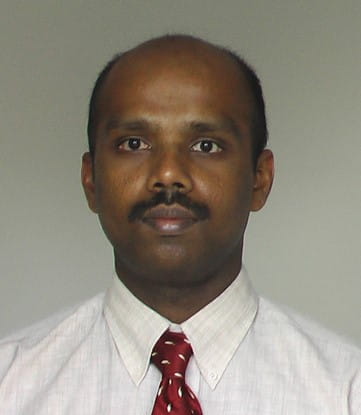
Dr. Anil Fernando
Personal Bio:
Dr. Anil Fernando received the B.Sc. (Hons.) degree (First Class) in electronics and telecommunication engineering from the University of Moratuwa, Sri Lanka, in 1995, and the M.Sc. in Communications (Distinction) from the Asian Institute of Technology, Bangkok, Thailand in 1997 and Ph.D. in Computer Science (Video Coding and Communications) from the University of Bristol, UK in 2001. He is a professor in Video Coding and Communications at the Department of Computer and Information Sciences, University of Strathclyde, UK. He leads the video coding and communication research team at Strathclyde. He has worked on major national and international multidisciplinary research projects and led most of them. He has published over 480 papers in international journals and conference proceedings and published a book on 3D video broadcasting. He has been working with all major EU broadcasters, BBC, and major European media companies/SMEs in the last decade in providing innovative media technologies for British and EU citizens. His main research interests are in Video coding and Communications, Machine Learning (ML) and Artificial Intelligence (AI), Semantic Communications, Signal Processing, Networking and Communications, Interactive Systems, Resource Optimizations in 6G, Distributed Technologies, Media Broadcasting and Quality of Experience (QoE).
Committee Members:
Udara Jayasinghe, University of Strathclyde, UK,[email protected]
Prabhath Samarathunga, University of Strathclyde, UK, [email protected]
Call for Papers
Background:
Computational simulation and applied mathematics are essential for the development and evaluation of emerging communication paradigms, including quantum communication systems. As multimedia data volumes continue to grow, reliable transmission of images and videos over noisy and bandwidth-limited channels remains a significant challenge. Classical communication techniques rely on mathematical models, numerical optimization, and signal processing algorithms to improve reliability and efficiency. Similarly, quantum communication systems depend heavily on computational simulation to model quantum states, noise processes, and decoding strategies, as practical large-scale quantum hardware is still under development. Applied mathematical tools, such as linear algebra, probability theory, optimization, and numerical analysis, form the foundation for modeling quantum states, designing encoding schemes, and evaluating system performance. The integration of quantum communication concepts with computational simulation enables the study of complex quantum–classical hybrid systems and supports the development of robust, high-fidelity image transmission frameworks.
Goal/Rationale:
Despite promising theoretical advantages, practical quantum communication systems for multimedia transmission remain difficult to realize due to noise sensitivity, limited hardware capabilities, and the complexity of quantum error mitigation techniques. As a result, computational simulation plays a critical role in exploring new quantum encoding strategies, evaluating their performance, and identifying feasible system architectures. This workshop aims to highlight how applied mathematical modeling and computational simulation can be used to design, analyze, and optimize quantum communication frameworks for image and video transmission. The focus is on bridging theoretical quantum information principles with practical simulation-based system design. Topics of interest include mathematical modeling of quantum states, multi-qubit encoding strategies, channel noise modeling, numerical performance evaluation, and hybrid quantum–classical communication systems. By bringing together researchers from applied mathematics, computational science, and quantum communication, the workshop seeks to foster interdisciplinary discussions, share emerging methodologies, and identify new research directions for robust and efficient multimedia transmission in quantum-enabled communication systems.
Scope and Information for Participants:
This workshop focuses on computational and mathematical aspects of quantum communication systems, with particular emphasis on image and multimedia transmission. Contributions are invited on topics such as mathematical modeling of quantum communication channels, multi-qubit encoding strategies, quantum signal processing, numerical simulation of quantum noise processes, optimization of quantum–classical hybrid transmission frameworks, and performance evaluation using perceptual quality metrics. The workshop encourages research that combines theoretical analysis with computational experimentation, including simulation-driven design of encoding schemes, channel models, and decoding algorithms. Applications involving image and video transmission, quantum-enhanced signal processing, and bandwidth-constrained communication systems are especially welcome. Both methodological studies and application-oriented research that demonstrate the role of applied mathematics and computational simulation in advancing practical quantum communication systems fall within the scope of this workshop.
Topics:
The main topics of this symposium are listed below.
Computational Simulation
- Adaptive Control and Non-Linear Control
- Artificial Intelligence
- Computational Intelligence
- Design, Analysis and Applications of Optimisation Algorithms
- Deterministic, Dynamic, Stochastic, Robust and Combinatorial Optimisation Models
- High Performance Computing
- Information Science
- Intelligent Control, Neuro-control, Fuzzy Control
- Machine Learning
- Mathematical Modeling and Simulation
- Nano- and Bio- Mechanics
- Optimization Techniques
- Robotics and Automation
- Smart Structures and Health Monitoring
- Soft Computing
- Structural Optimization
- Theoretical and Empirical Studies of Computational Methods, Models and Empirical Analysis
Meanwhile, submissions aligned with the overall conference theme are also welcome.
Mathematics and Applied Mathematics
- Algebra and Its Application
- Applied Partial Differential Equations
- Bayesian Inference
- Control Theory
- Discrete Applied Mathematics
- Fluid Dynamics
- Fuzzy Mathematics and Its Applications
- Geometry
- Image Processing
- Integral Equations
- Nonlinear Problems in Mechanics
- Numerical Analysis
- Optimization and Operational Research
- Planning and Scheduling
- Probability Theory
- Regression Analysis Estimation Theory
- Sampling Theory
- Statistics
- Stochastic Processes
Mathematical Physics
- Dynamical Systems
- Equilibrium Statistical Mechanics
- General Relativity
- Integrable Systems
- Many-body Quantum Systems and Condensed Matter Physics
- Nonequilibrium Statistical Mechanics
- Partial Differential Equations
- Probability and Random Structures
- Quantum Field Theory
- Quantum Information
- Quantum Mechanics and Spectral Theory
- String Theory and Quantum Gravity
Applied Physics
- Accelerator Physics
- Accelerator Research and Development
- Acoustics, Noise and Vibration
- Applications of Particle Trapping
- Biophysics, Medical Physics
- Detectors and Data Handling
- Engineering Physics
- Instrumentation and Control Components
- Magnetic Devices and Materials
- Materials Physics
- Mechanics, Rheology and Tribology
- Nano and Metamaterials
- Neuromorphic Computing
- Nuclear Physics
- Quantum Chromodynamics and Quantum Computers
- Spin Dynamics
- Statistical Mechanics
- Stealth Technology
- Storage Ring Physics
- Systems and Automation Thermodynamics
Submission:
Prospective authors are kindly invited to submit full papers that include title, abstract, introduction, tables, figures, conclusion and references. It is unnecessary to submit an abstract in advance. Please submit your papers in English.
Each paper should be no less than 4 pages. One regular registration can cover a paper of 6 pages, and additional pages will be charged. Please format your paper well according to the conference template before submission. Paper Template Download
Please prepare your paper in both .doc/.docx and .pdf format and submit your full paper by email with both formats attached directly to [email protected]
Important Dates:
| Process | Date & Time |
|---|---|
| Submission Deadline | June 17, 2026 |
| Symposium Date | June 24, 2026 |
| Notification of Acceptance | 7-20 workdays |
Publication:
Accepted papers of the symposium will be published in Conference Proceedings, and will be submitted to EI Compendex, Conference Proceedings Citation Index (CPCI), Crossref, CNKI, Portico, Engineering Village (Inspec), Google Scholar, and other databases for indexing. The situation may be affected by factors among databases like processing time, workflow, policy, etc.
This symposium is organized by CONF-MPCS 2026 and it will independently proceed the submission and publication process.
* Please note that the publication policy may vary between different publishers. For details regarding the publication process, kindly refer to the policies of the respective publisher.