-
 Optical Magnetometry and Computational SimulationHANGZHOU, CHINA APRIL 12, 2026
Title:
Optical Magnetometry and Computational Simulation
Date:
April 12th, 2026 (UTC+8)
Organizer:
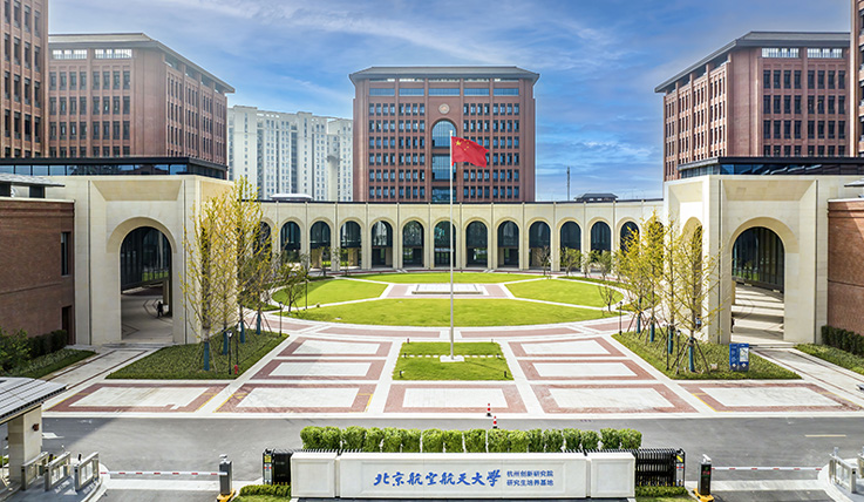
Hangzhou Innovation Institute of Beihang University
Symposium Chair:

Dr. Jixi Lu
Personal Bio:
Jixi Lu is currently an Associate Professor at the School of Instrumentation and Optoelectronic Engineering, Beihang University, China. His primary research interests include atomic magnetometer, high-precision magnetic field control, and low-noise magnetic shield. His group has developed various kinds of miniatured atomic magnetometer, which achieved a sensitivity of fT/Hz1/2 level. They have carried out applications such as extremely-weak magnetic detection, metrology and imaging. His research is funded by over 10 projects, including the Innovation Program for Quantum Science and Technology, and the National Natural Science Foundation of China. He has published more than 50 peer-reviewed papers, 30 authorized patents, and has awarded one first prize of Ministry-level.

Dr. Ying Liu
Personal Bio:
Ying Liu is currently an Assistant Professor at the School of Instrumentation and Optoelectronic Engineering, Beihang University, China. Her research focuses on SERF (Spin-exchange relaxation-free) magnetometer, precision measurement of magnetic fields and its applications—specifically developing functional imaging by optical magnetometry. Her group has developed various kinds of miniatured SERF magnetometer, which Achieved multi - channel integrated applications in magnetocardiography (MCG) and magnetoencephalography (MEG). She research is funded by over 10 projects, including the National Natural Science Foundation, the National Key Research and Development (R&D) Plan, Science and Technology Innovation 2030- Major Project, etc. Based on these projects, she published more than 40 papers in IEEE Trans, Measurement and other journals/conferences with 26 as the first or corresponding author, and 20 authorized patents.
Committee Members:
Dr. Pengcheng Du, Beihang University,China, [email protected]
Dr. Chuanchao Wu, North University of China, China, [email protected]
Dr. Qian Cao, Hangzhou Innovation Institute of Beihang University, China, [email protected]
Call for Papers
Background:
Optical magnetometry is a type of technology that achieves high-precision magnetic field measurement based on the correlation effect between the optical response of atoms/molecules and magnetic fields. It is centered on physical mechanisms such as the Zeeman effect and optical pumping-optical detection. Through simulation, these complex physical processes are converted into computable mathematical models. By simulating the influence of changes in key parameters on the sensitivity and stability of the magnetometer, theoretical support is provided for the optimization of technical schemes. The International Conference on Optical Magnetometry and Simulation, which is organized by the Hangzhou Innovation Institute of Beihang University, aims to promote a deep exchange of knowledge related to mechanisms, technologies and applications of optical magnetometry and simulation. Sessions will include contributed papers, presentations and panel discussions. Scholars (including graduate students) from all related area interested in optical sensors are all encouraged to submit and/or to attend.
Goal/Rationale:
The International Conference on Optical Magnetometry and Simulation aims to foster a deep exchange of knowledge related to mechanisms, technologies and applications of optical magnetometry and simulation. The workshop will invite researchers from all over the world to discuss the latest research results and cutting-edge topics in the field of optical magnetometry and other related optical and atomic sensors. We aim to provide a platform for excellent young scholars and graduate students communicate and discuss the recent developments in this area. We hope to provides opportunities for the attendees to exchange new ideas and promote the rapid development of optical magnetometry and simulation.
Scope and Information for Participants:
Topics related to the conference theme - "International Conference on Optical magnetometry and simulation " - are particularly encouraged, including:
- Optically pumped magnetometers
- Spin-exchange relaxation-free magnetometers
- Coherent population trapping magnetometers
- Optical coherence tomography and simulation
- optical sensing and simulation
- Extremely-weak magnetic field measument
- Biomagnetic imaging and simulation
Topics:
The main topics of this symposium are listed below.
Applied Physics
- Accelerator Physics
- Accelerator Research and Development
- Acoustics, Noise and Vibration
- Applications of Particle Trapping
- Biophysics, Medical Physics
- Detectors and Data Handling
- Engineering Physics
- Instrumentation and Control Components
- Magnetic Devices and Materials
- Materials Physics
- Mechanics, Rheology and Tribology
- Nano and Metamaterials
- Neuromorphic Computing
- Nuclear Physics
- Quantum Chromodynamics and Quantum Computers
- Spin Dynamics
- Statistical Mechanics
- Stealth Technology
- Storage Ring Physics
- Systems and Automation Thermodynamics
Meanwhile, submissions aligned with the overall conference theme are also welcome.
Computational Simulation
- Adaptive Control and Non-Linear Control
- Artificial Intelligence
- Computational Intelligence
- Design, Analysis and Applications of Optimisation Algorithms
- Deterministic, Dynamic, Stochastic, Robust and Combinatorial Optimisation Models
- High Performance Computing
- Information Science
- Intelligent Control, Neuro-control, Fuzzy Control
- Machine Learning
- Mathematical Modeling and Simulation
- Nano- and Bio- Mechanics
- Optimization Techniques
- Robotics and Automation
- Smart Structures and Health Monitoring
- Soft Computing
- Structural Optimization
- Theoretical and Empirical Studies of Computational Methods, Models and Empirical Analysis
Mathematical Physics
- Dynamical Systems
- Equilibrium Statistical Mechanics
- General Relativity
- Integrable Systems
- Many-body Quantum Systems and Condensed Matter Physics
- Nonequilibrium Statistical Mechanics
- Partial Differential Equations
- Probability and Random Structures
- Quantum Field Theory
- Quantum Information
- Quantum Mechanics and Spectral Theory
- String Theory and Quantum Gravity
Mathematics and Applied Mathematics
- Algebra and Its Application
- Applied Partial Differential Equations
- Bayesian Inference
- Control Theory
- Discrete Applied Mathematics
- Fluid Dynamics
- Fuzzy Mathematics and Its Applications
- Geometry
- Image Processing
- Integral Equations
- Nonlinear Problems in Mechanics
- Numerical Analysis
- Optimization and Operational Research
- Planning and Scheduling
- Probability Theory
- Regression Analysis Estimation Theory
- Sampling Theory
- Statistics
- Stochastic Processes
Submission:
Prospective authors are kindly invited to submit full papers that include title, abstract, introduction, tables, figures, conclusion and references. It is unnecessary to submit an abstract in advance. Please submit your papers in English.
Each paper should be no less than 4 pages. One regular registration can cover a paper of 6 pages, and additional pages will be charged. Please format your paper well according to the conference template before submission. Paper Template Download
Please prepare your paper in both .doc/.docx and .pdf format and submit your full paper by email with both formats attached directly to [email protected]
Important Dates:
| Process | Date & Time |
|---|---|
| Submission Deadline | April 7, 2026 |
| Symposium Date | April 12, 2026 |
| Notification of Acceptance | 7-20 workdays |
Publication:
Accepted papers of the symposium will be published in Theoretical and Natural Science (TNS) (Print ISSN 2753-8818), and will be submitted to Conference Proceedings Citation Index (CPCI), Crossref, CNKI, Portico, Engineering Village (Inspec), Google Scholar, and other databases for indexing. The situation may be affected by factors among databases like processing time, workflow, policy, etc.
Publication info
Title: Theoretical and Natural Science (TNS)
Press: EWA Publishing, United Kingdom
ISSN: 2753-8818, 2753-8826 (electronic)
This symposium is organized by CONF-MPCS 2026 and it will independently proceed the submission and publication process.
* The papers will be exported to production and publication on a regular basis. Early-registered papers are expected to be published online earlier.