Background
Computational simulation and applied mathematics are essential for the development and
evaluation of emerging communication paradigms, including quantum communication systems. As
multimedia data volumes continue to grow, reliable transmission of images and videos over
noisy and bandwidth-limited channels remains a significant challenge. Classical
communication techniques rely on mathematical models, numerical optimization, and signal
processing algorithms to improve reliability and efficiency. Similarly, quantum
communication systems depend heavily on computational simulation to model quantum states,
noise processes, and decoding strategies, as practical large-scale quantum hardware is still
under development. Applied mathematical tools, such as linear algebra, probability theory,
optimization, and numerical analysis, form the foundation for modeling quantum states,
designing encoding schemes, and evaluating system performance. The integration of quantum
communication concepts with computational simulation enables the study of complex
quantum–classical hybrid systems and supports the development of robust, high-fidelity image
transmission frameworks.
The symposium, which serves as a specialized session of the 4th International Conference on Mathematical Physics and Computational Simulation (CONF-MPCS 2026), will focus on applied mathematics and simulation.
Goal/Rationale
Despite promising theoretical advantages, practical quantum communication systems for
multimedia transmission remain difficult to realize due to noise sensitivity, limited
hardware capabilities, and the complexity of quantum error mitigation techniques. As a
result, computational simulation plays a critical role in exploring new quantum encoding
strategies, evaluating their performance, and identifying feasible system architectures.
This symposium aims to highlight how applied mathematical modeling and computational
simulation can be used to design, analyze, and optimize quantum communication frameworks for
image and video transmission. The focus is on bridging theoretical quantum information
principles with practical simulation-based system design. Topics of interest include
mathematical modeling of quantum states, multi-qubit encoding strategies, channel noise
modeling, numerical performance evaluation, and hybrid quantum–classical communication
systems. By bringing together researchers from applied mathematics, computational science,
and quantum communication, the symposium seeks to foster interdisciplinary discussions, share
emerging methodologies, and identify new research directions for robust and efficient
multimedia transmission in quantum-enabled communication systems.
Scope
This symposium focuses on computational and mathematical aspects of quantum communication
systems, with particular emphasis on image and multimedia transmission. Contributions are
invited on topics such as mathematical modeling of quantum communication channels,
multi-qubit encoding strategies, quantum signal processing, numerical simulation of quantum
noise processes, optimization of quantum–classical hybrid transmission frameworks, and
performance evaluation using perceptual quality metrics. The symposium encourages research
that combines theoretical analysis with computational experimentation, including
simulation-driven design of encoding schemes, channel models, and decoding algorithms.
Applications involving image and video transmission, quantum-enhanced signal processing, and
bandwidth-constrained communication systems are especially welcome. Both methodological
studies and application-oriented research that demonstrate the role of applied mathematics
and computational simulation in advancing practical quantum communication systems fall
within the scope of this symposium.
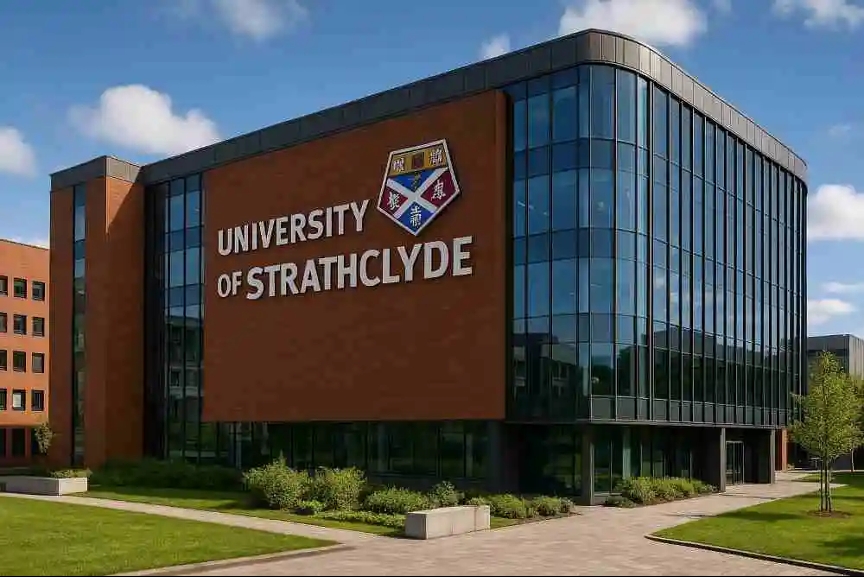 Computational Simulation and Applied MathematicsGLASGOW, UK June 24, 2026